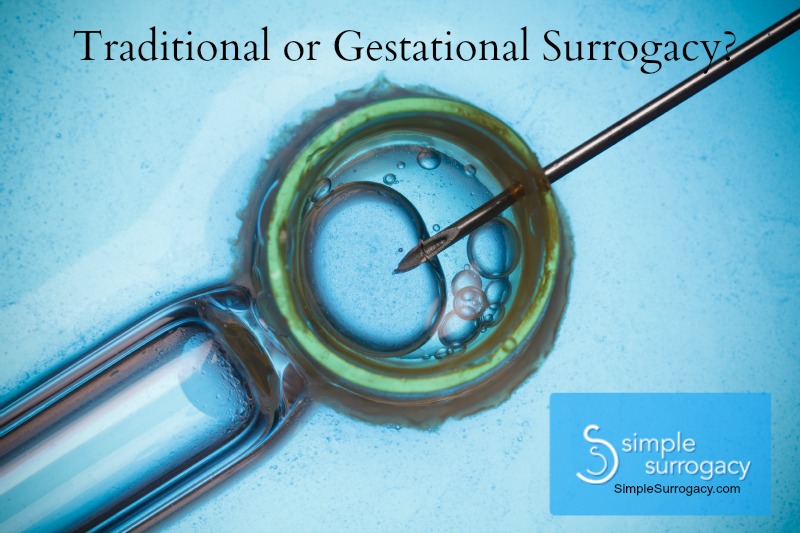
Surrogacy is not a one size fits all solution. There are two types- traditional and gestational surrogacy and each of these types comes with their own challenges based on your personal needs.
Traditional Surrogacy.
The surrogate will use either artificial insemination or IVF along with sperm from the intended father or a sperm donor. The surrogate will be providing her own eggs. This type of surrogacy is much more rare, and does come with its own legal risks and complications. Be sure you have an attorney and Agency experienced in Traditional surrogacy and understand the potential drawbacks.
Gestational Surrogacy
With the advancement of IVF (in vitro fertilization), we are now able to harvest eggs (either from the intended mother or donor) so they can be fertilized with the father’s or donor’s sperm. This happens outside the womb and the resulting embryo can then be placed into the gestational surrogate. Unlike traditional surrogacy, the gestational surrogate’s eggs are not used so she has no genetic links to the child. From a legal standpoint, gestational surrogacy is much less complex and more commonly chosen than other methods.
Surrogate Compensation: How to Balance Fair Pay with Long-Term Relationship Health In today’s surrogacy landscape, few topics generate more conversation—or more confusion—than surrogate compensation. Intended parents want to ensure they are offering a fair and respectful package. Surrogates want to…
Welcoming a Baby in the Chinese New Year of the Horse: Strength, Legacy, and a Powerful Beginning As the owner of an elite surrogacy agency—and as a three-time surrogate myself—I have had the profound honor of witnessing new life enter…
Is Your Surrogacy Journey Ethical? Why Choosing a Surrogate in a Developing Country Could Be a Moral Failing In the deeply personal and emotionally charged journey of building a family through surrogacy, one question should stand above all else: Is…